


|
|
|
|
| True Crime |      |
|
Cover
to Cover.. 252 Balmoral Drive, Southport
PR9 8QA, UK.. Tel. 44 (0)1704 231443..
E-mail covers@freeuk.com |
| There
is no crime of which I do not deem myself capable. Johann Wolfgang von Goethe |
 |
 |
 |
 |
 |
 |
 |
 |
 |
 |
 |
 |
 |
 |
 |
 |
 |
 |
 |
 |
 |
 |
 |
 |
| Author
not given:ooooooooooooooooooooooooooooooooooooClick
on book image for larger version |
|||
Gendarmeria
Nacional Argentina 60 Anos Adhesion |
£20.00 | ||
Armes,
Jay J: Jay J Armes - Investigator |
£5.00 | ||
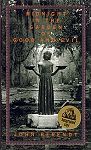 |
Berendt,
John: Midnight in the Garden of Good and Evil
Random House 1st (?) 1994 signed by author F/F 634 gms (Order reference 1403). Shots rang out in Savannah's grandest mansion in the misty, early morning hours of May. 2, 1981. Was it murder or self-defence? For nearly a decade, the shooting and its aftermath reverberated throughout this hauntingly beautiful city of moss-hung oaks and shaded squares. John Berendt's sharply observed, suspenseful, and witty narrative reads like a thoroughly engrossing novel, and yet it is a work of nonfiction. Berendt skillfully interweaves a hugely entertaining first-person account of life in this isolated remnant of the Old South with the unpredictable twists and turns of a landmark murder case. It is a spellbinding story peopled by a gallery of remarkable characters: the well-bred society ladies of the Married Woman's Card Club; the turbulent young redneck gigolo; the hapless recluse who owns a bottle of poison so powerful it could kill every man, woman, and child in Savannah; the aging and profane Southern belle who is the "soul of pampered self-absorption"; the uproariously funny black drag queen; the acerbic and arrogant antiques dealer; the sweet-talking, piano-playing con artist; young blacks dancing the minuet at the black debutante ball; and Minerva, the voodoo priestess who works her magic in the graveyard at midnight. These and other Savannahians act as a Greek chorus, with Berendt revealing the alliances, hostilities, and intrigues that thrive in a town where everyone knows everyone else. Midnight in the Garden of Good and Evil: A Savannah Story is a sublime and seductive reading experience. Brilliantly conceived and masterfully written, this enormously engaging portrait of a most beguiling Southern city is certain to become a modern classic. |
£60.00 |
|
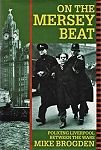 |
Brogden, Mike:
On the Mersey Beat - policing Liverpool between
the wars Oxford University Press 1st 1991 8vo, short crse + small tr to d/w o/w F/VG++ 465 gms (Order reference 10465). On the Mersey Beat tells the story of police life in one of Britain's great cities before the Second World War. This is the story of the policemen (for there were no policewomen) who policed Liverpool between the wars. Related in their own words it tells of working conditions which, judged even by standards of the day, were appalling, of a hostile public wary of police officers and of dictatorial police chiefs willing to go to extreme lengths to keep the streets of Liverpool free of `undesirables'. Using the oral testimony of survivors from this period On the Mersey Beat brings to life the often mundane, yet occasionally dangerous life of the 'beat policeman'. Tales of relations with bookies and prostitutes, the pettiness of CID work, and the all-important relationship of the police with industrial workers and ethnic minorities are recounted by the men, often ill-trained and ill-prepared, whose task it was to police the streets of Liverpool. This is the compelling, dramatic, and often moving story of the men who walked `The Mersey Beat'. |
£90.00 |
|
| Chesshyre,
Robert: The Force - Inside the Police Sidgwick & Jackson 1st 1989 8vo, v vmin staining to inside of price-clipped d/w o/w VG+/VG+ 585 gms (Order reference 13059). |
£6.00 |
||
| Chester, Graham:
Berserk! - Motiveless random massacres Michael O'Mara 1st 1993 sm tr to btm fr of d/w o/w F/VG+ 478 gms (Order reference 1616). |
£5.00 |
||
| Dershowitz,
Alan M: Reasonable Doubts - The O J Simpson
case and the criminal justice system Simon & Schuster 3rd imp 1996 8vo, v v min bmp to bds o/w VG++/VG++ 470 gms (Order reference 8055). |
£5.00 |
||
| Eddleston,
John J: The Executed of the Twentieth Century
- Murderous Manchester Breedon Books 1st 1997 large 8vo, v v min mrks to bds, v v sl wr to d/w o/w VG++/VG++ 650 gms (Order reference 12311). |
£9.00 |
||
| Graef,
Roger: Living Dangerously - Young Offenders
in their Own Words Harper Collins 1st 1992 VG++/VG++ 626 gms (Order reference 470). |
£9.00 |
||
| Graef,
Roger: Talking Blues - the police in their
own words Collins Harvill rep 1989 large 8vo, v min bmps to btm edges of bds o/w F+/F 1025 gms (Order reference 13106). |
£5.00 |
||
| Hall,
Angus (ed): The Crime Busters - the FBI, Scotland
Yard, Interpol - the story of criminal detection Black Cat rep 1990 4to, glazed pictorial boards in a similar d/w F/VG++ 830 gms (Order reference 13367). |
£2.00 |
||
| Hurley, Donald
J: Alcatraz Island Memories
Fog Bell Enterprises revised 6th prtg 1991 4to pb 149pp, v v min wr to edges of cvrs o/w VG++. Inscribed by the author on title page verso. 370 gms (Order reference 7134). |
£5.00 |
||
| Jackson,
Brian: The Black Flag - a look at the strange
case of Nicola Sacco and Bartolomeo Vanzetti Routledge and Kegan Paul 1st 1981 8vo, small name + date to fep, small tr + v min crsing to d/w o/w F/VG+ 565 gms (Order reference 11561). |
£6.00 |
||
| Kray,
Kate: The Twins - Free at Last John Blake 1st 2000 8vo, v min to bds, crsing to d/w edges o/w VG+/VG+ 580 gms (Order reference 10694). |
£7.00 |
||
| Kray, Reg:
A Way of Life - over 30 years of blood, sweat and tears
Sidgwick & Jackson 1st 2000 8vo, book v slightly cocked left to right, crsing to d/w o/w VG++/VG++. Signed by author on 1/2 title page. 640 gms (Order reference 10972). |
£6.00 |
||
| Lane,
Brian: The Encyclopedia of Forensic Science
BCA 1992 4to F/VG++ 650 gms (Order reference 10670). |
£5.00 |
||
| Lane, Brian
& Gregg, Wilfred: The Encyclopedia of
Serial Killers Headline 1st 1992 v feint brning to p edges, rbs + wr to d/w o/w VG++/VG 542 gms (Order reference 1574). |
£10.00 |
||
| Lewis,
Jerry D (ed): Crusade Against Crime
T V Boardman 1st UK 1965 8vo, min spotting to foredge + top edge of pages, sl wr, chips, small tr + tiny pce missing from d/w o/w VG++/VG++ 330 gms (Order reference 13038). |
£4.00 |
||
| Lord
Longford: Punishment and the Punished Chapman's rep 1991 8vo, crsing to top edge of d/w o/w F/VG+ 645 gms (Order reference 11379). |
£5.00 |
||
| Marquis,
Max: Deadly Doctors Macdonald 1st 1992 F/VG++ 432 gms (Order reference 1511). |
£7.00 |
||
| Mason, Eric:
The Brutal Truth - the inside story of a
gangland legend Mainstream Publishing 1st 2000 8vo, crsing to d/w o/w VG++/VG+ 580 gms (Order reference 10665). |
£10.00 |
||
| McNamee,
Eoin: Resurrection Man Picador 1st 1994 VG++/VG++ 390 gms (Order reference 1528). |
£25.00 |
||
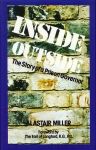 |
Miller, Alistair:
Inside Outside - the story of a prison govenor
Queensgate Press 1st 1976 crsing to 1/2 title o/w VG++/VG++ 454 gms (Order reference 2514). ALASTAIR MILLER joined the Prison Service in 1945, as an officer at an Approved School. By 1953 he was Governor of Dover Prison, and then went on to become Governor of Winchester, Hindley, Parkhurst and Pentonville Prisons. INSIDE OUTSIDE is a personal account of Alastair Miller's experiences within the Prison Service, and the problems facing a Governor at some of Britain's Top-Security prisons. He describes for the first time in detail the tensions that brought about the dangerous riots at Parkhurst Prison in 1969 Mr Miller also describes the many radical and controversial changes he introduced into the Prison Service, and his views on how men should be treated whilst in prison. This book gives the reader a rare insight into the day-to-day workings of prison life and what it is really like for the prisoners and staff behind prison walls. ALASTAIR MILLER also tells about the time he spent as Director of the Old Charing Cross Hospital, run by the St. Mungo Community for Dossers in London: he describes a very different life, dealing with and caring for the unwanted men of London. The same compassion and concern for the well-being of others shine through this final chapter, as they do throughout this story of deep knowledge and understanding of the problems facing men under stress and disillusionment. This autobiography is full of many very funny stories, and will provide fascinating and highly entertaining reading. |
£4.50 |
|
| Mills,
James: Report to the Commissioner Barrie & Jenkins 1st 1972 sm mrks to fep, wr to d/w o/w VG+/VG 408 gms (Order reference 833). |
£10.00 |
||
| Morton, James:
Bent Coppers - a survey of police corruption
Little Brown & Co. 1st 1993 large 8vo, small mrk to base of pages o/w F/VG++ 780 gms (Order reference 12310). |
£2.00 |
||
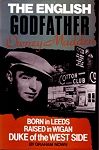 |
Nown,
Graham: The English Godfather Owney Madden
Ward Lock 1st 1987 8vo, tanning to pp, v v sl crsing to hd of d/w spine o/w F/F 520 gms (Order reference 8108). Owney ‘The Killer' Madden, declared America's most dangerous public enemy, was one of the most influential godfathers of organized crime this century. Born in Leeds in 1891, he emigrated to America with his family at the age of eleven, although he never completely lost his Lancashire accent. His family settled in one of the most notorious areas of New York, 'Hell's Kitchen' ,where Owney was drawn into a life of petty crime and gang violence. By the 1920s and 30s, Madden, the Duke of the West Side, ran New York. He was the owner of the Cotton Club, a place synonymous with the jazz era, and his rich and famous companions included George Raft, his best friend, and Mae West. During the dry years of the Prohibition he ran a chain of speakeasies, selling bootlegged beer and smuggled alcohol, and in this corrupt city he found little opposition from the police, the judges and the politicians, many of whom were on his payroll. Then in 1933, at the height of his notoriety, Madden agreed to be exiled to Hot Springs, Arkansas to avoid prosecution, in a million dollar deal that was so secret it could never be officially recorded. In Hot Springs, Owney settled down into a life of quiet respectability. He married the postmaster's daughter, Agnes Demby and joined the local Chamber of Commerce. He was, however, constantly shadowed by FBI agents, who failed to pin anything on him in spite of the fact that he remained a supremely powerful underworld figure until the day he died in 1964. The author, Graham Nown, has spent over four years researching his subject, travelling a total of 10,000 miles to interview Madden's widow, friends and former business associates. By studying Madden's voluminous FBI file, searching through government archives and dusty newspaper libraries, and persuading Agnes Madden to allow him access to her private collection of letters, diaries and photographs never before revealed, he has pieced together this thrilling account of Owney Madden's life. |
£45.00 |
|
| Perkins,
Roger: The Punjab Mail Murder - the story
of an Indian Army officer Picton Publishing 1st 1986 8vo M/F 340 gms (Order reference 8898). |
£8.00 |
||
| Reilly,
John W: An Account of 150 Years of Policing
Birmingham West Midlands Police no date (1989?) 8vo F/F 655 gms (Order reference 13797). |
£3.50 |
||
| Shortfall,
Barry: The Cameo Murders Bluecoat Press no date 4to pb 223pp, v v min bmp + wr to edges of cvrs o/w VG++ 390 gms (Order reference 11727). Fifty years have now passed since the brutal murders of the manager and his assistant at the Cameo Cinema in Liverpool. Immediately, the police launched a massive manhunt and over 9,500 houses were visited, 75,000 people interviewed, 1,800 fingerprints taken and handwriting samples taken from 1,840 women. The subsequent trial and conviction of George Kelly and Charles Connolly made legal history. The first trial was the longest murder trial in England and Kelly become one of few men to be tried twice for a capital offence. The conviction and execution of Kelly is one of the milestones which led to the eventual ending of capital punishment. The probability of a miscarriage of justice has ensured the Cameo case a lasting place in Liverpool folklore. Barry Shortall's gripping account of the case is essential reading. Charles Connnolly's counsel at his first trial ended his defence: "I ask you to use this test: would it be right in the years ahead when you look back at the Cameo murder trial to be able to say, 'I know what I did was right. If you look back and said, 'I think', and 'I hope', then your verdict will not be right". |
£7.50 |
||
| Smith, Ken:
Inside Time Harrap 1st 1989 8vo, min bmps to bds, wr, sl crsing + 1 tear to d/w o/w VG+/VG 605 gms (Order reference 12942). |
£4.00 |
||
| Southerton,
Peter: Reading Gaol by Reading Town Berkshire Books 1st 1993 8vo pb 134pp, min bmps + wr to edges of cvrs o/w VG++ 335 gms (Order reference 10773). |
£5.00 |
||
| Treherne,
John: The Canning Enigma Jonathan Cape 1st 1989 8vo, v v min bmps to bds o/w VG++/VG++ 495 gms (Order reference 13066). |
£6.00 |
||
| Whitmore,
Richard (intro + commentaries): Victorian
and Edwardian Crime and Punishment from Old Photographs B T Batsford rep 1984 4to, v v min wr to bds, v v min crsing to d/w o/w VG++/VG++ 520 gms (Order reference 9239). |
£7.50 |
||
| Wilson, Kirk:
Investigating Murder Robinson Publishing 1st 1990 M/F 484 gms (Order reference 571). |
£7.50 |
||
| Wise,
Sarah: The Italian Boy - murder and grave-robbery
in 1830s London Jonathan Cape 1st 2004 large 8vo, sl wrinkling/curling to d/w edges o/w F/VG++ 620 gms (Order reference 13105). |
£6.50 |
||
| TOP |
|
|
|
|